I Needed Doc Martin. Britain Gave Me Mrs Tishell.
Published on September 25, 2026 • 11 min read
How losing my blood-pressure medication in Cornwall turned my trip into a three-day Doc Martin story across England and Wales — except there was no Doc Martin when I needed one.
Everything that follows is true. It is also why I now travel with two sets of my regular medication, packed in two different places.
At the time, however, I was still innocent enough to believe that losing a box of tablets while travelling was a minor inconvenience. I had, after all, solved exactly that kind of problem abroad before. Britain was about to educate me.
The Night Riviera ate my blood-pressure pills
The trouble began somewhere between London and Cornwall. I had boarded the Night Riviera sleeper at Paddington the previous evening and slept remarkably well. By the time the train was approaching Truro that morning, I was rested, comfortable and suddenly in a hurry.
I gathered my things quickly and, somewhere in the process, my blood-pressure medication — Triplixam, a combination of three active ingredients — fell out without me noticing.


A little later, I was sitting over morning tea in Truro, waiting for Hertz to open so I could collect my hire car, when I realised the tablets were gone.
Annoying, certainly, but hardly a disaster. I was in Britain, not crossing the Gobi Desert. There were pharmacies everywhere. I would simply buy another box.
That confidence survived for approximately one pharmacy.
The timing was particularly elegant. I had lost my blood-pressure medication on the very morning I was about to drive a hire car through Cornwall for the first time — on the left.
The first few kilometres revealed that decades of driving on the other side had produced some fairly stubborn muscle memory. A couple of attempts to change gear ended with my hand reaching towards the door instead. The narrow Cornish roads were a more convincing test: I brushed the left tyre against the roadside more than once and became deeply grateful to both God and the devil that I had taken out full insurance.
Still, the drive went surprisingly well. Somewhere between Tintagel and Port Isaac, I had to stop while a flock of sheep decided where it wanted to go. Shortly afterwards, a herd of cows did the same. Neither appeared particularly concerned about my blood pressure.
Tintagel says no
My first destination was Tintagel. Before doing anything particularly Arthurian, I went into a pharmacy and explained what had happened.
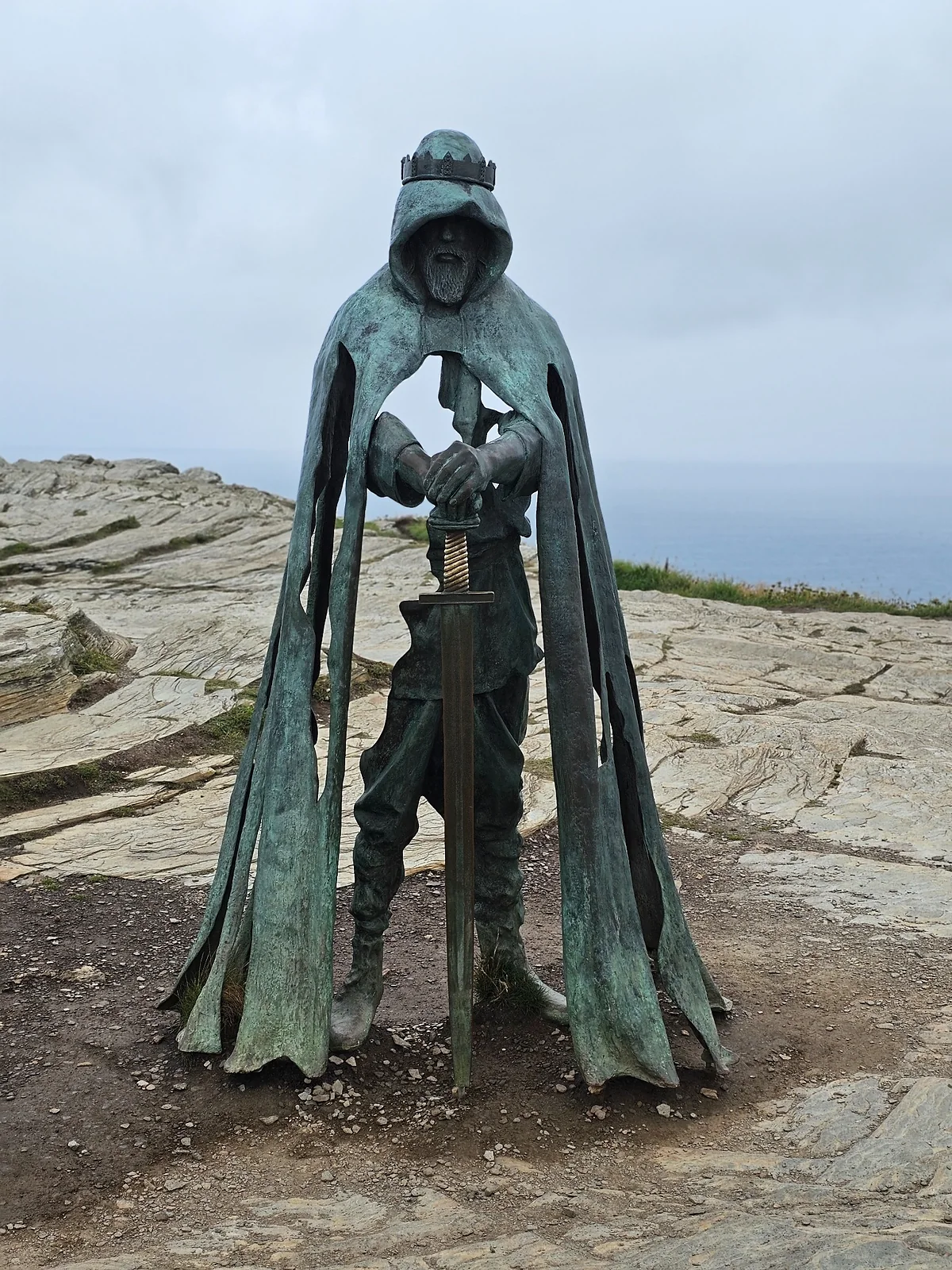
The pharmacist told me he could not supply the medication without a prescription.
That surprised me, but not enough to worry me. Port Isaac was next, and Port Isaac had one enormous advantage: it was Doc Martin’s village — or, more precisely, the real Cornish village that played the fictional Portwenn in the television series.
For those who have never seen it, Portwenn is dominated by Dr Martin Ellingham, a brilliant but spectacularly antisocial village doctor surrounded by residents whose medical problems are frequently matched by their eccentricity. Then there is Mrs Tishell, the village pharmacist: devoted to the doctor with alarming intensity and capable of making the dispensing of medication look like performance art.


Surely, of all places in Cornwall, this was where my tiny medical problem would be solved.
It was not.
I needed Doc Martin. There was no doctor.
There was a medical practice in Port Isaac. There was simply no doctor available there that day.
The irony was so neat that I would have appreciated it considerably more if I had not actually needed one.
I called the travel-insurance service provided through my bank, explained the problem and received advice of breathtaking sophistication: I should find a doctor and, if there were any costs, keep the receipt.
Excellent. I had already independently developed the same treatment plan.
So I carried on with the day. By the time I drove back into Truro that evening, I had promoted myself to specialist in driving on the wrong side of the road.
I returned the car and continued the journey. I was still not particularly worried. Plymouth was next: larger city, more pharmacies, more doctors.
Surely this would be over by breakfast.
It was not.
Britain introduces the prescribing pharmacist
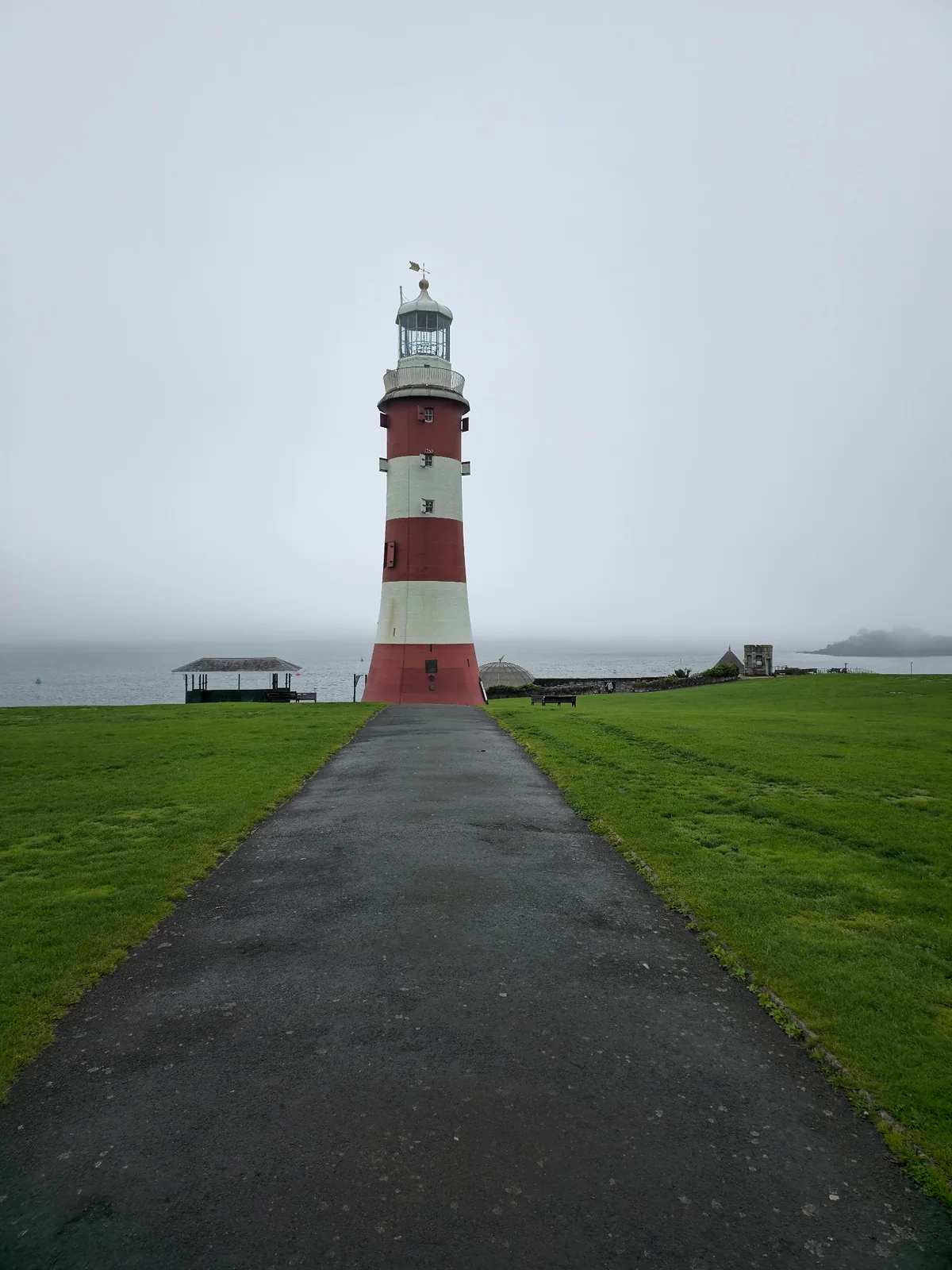
The following morning in Plymouth, I tried another pharmacy. Perhaps, I thought, a sympathetic pharmacist would recognise ordinary long-term treatment and simply help.
He could not help without a prescription either, but he was extremely useful in two ways. First, he explained which separate medicines could provide the three active ingredients in my usual treatment. Second, he told me about a kind of pharmacist I had never heard of before: a pharmacist independent prescriber — someone who could actually prescribe.
Wonderful.
Where could I find one?
The pharmacy used the services of one, I was told, but he came about once a week.
Naturally, not that day.
The prescribing pharmacist immediately acquired mythical status in my mind: a rare medical animal migrating between British pharmacies, occasionally reported but almost impossible to observe in its natural habitat.
There was a medical practice nearby, and yes, they could help me. Unfortunately, the first available appointment was that afternoon. I already had the rest of the journey planned and train tickets booked. Waiting several hours would mean dismantling the itinerary for what, to me, still seemed like a problem that should take five minutes to solve.
So I did what any sensible traveller does when one city fails to produce a box of tablets:
I went to another city.
Exeter and the pharmaceutical unicorn
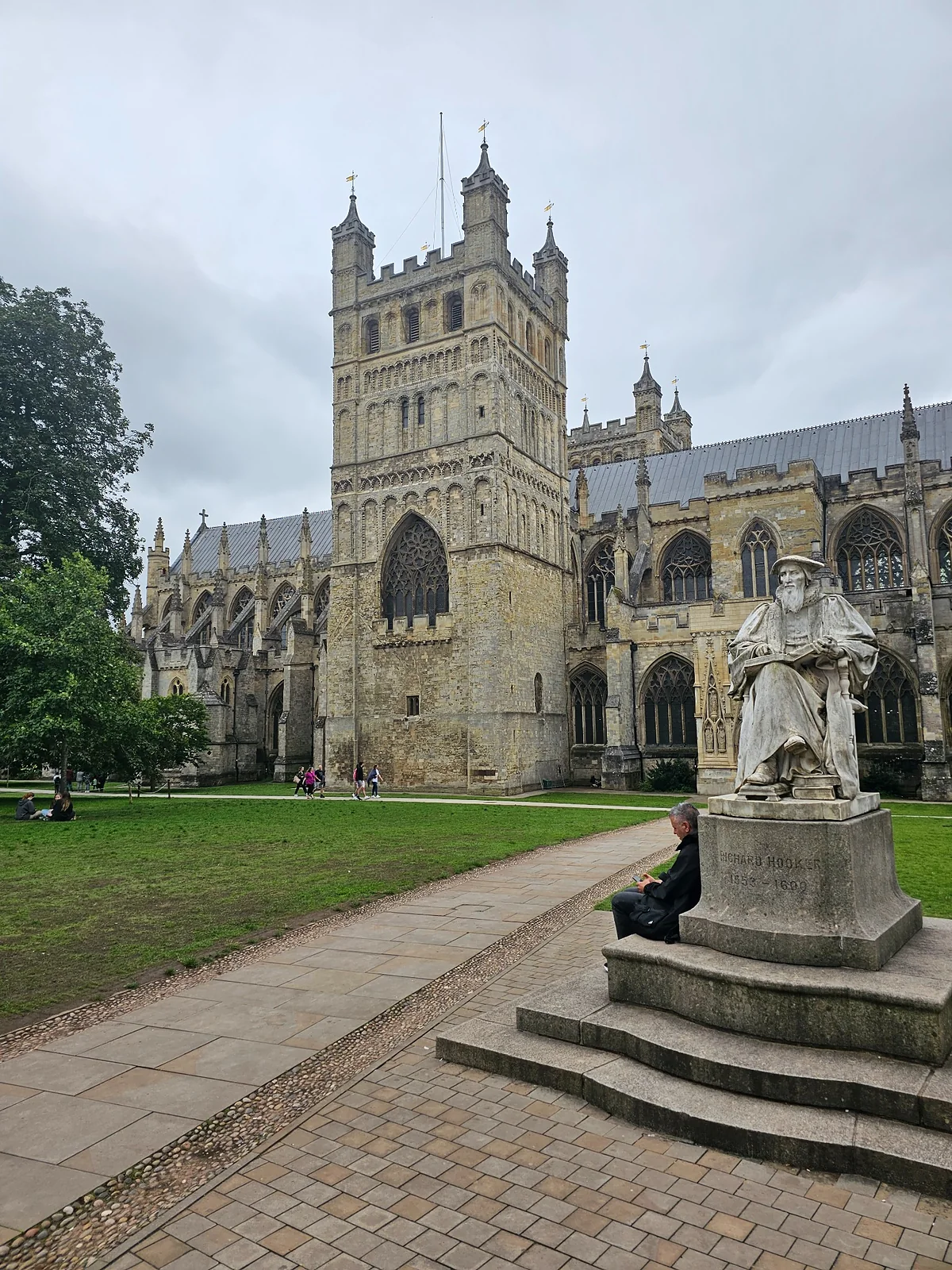
By Exeter, the situation had become ridiculous. I tried three pharmacies and found no prescribing pharmacist in any of them.
At the third, I received what sounded like a solution: a telephone service through which I could explain the problem and potentially obtain a prescription.
Excellent — except for one minor detail.
I was told the service could only be reached from a UK phone number.
I did not have one.
So I moved from pharmacies to doctors. This was where the trip stopped resembling normal travel and began to feel increasingly like an episode of Doc Martin whose writers had developed an unhealthy interest in healthcare bureaucracy.
The first nurse wanted me punished
At the first medical practice, getting anywhere near a doctor required forms, questions, more forms and eventually an interrogation by a nurse.
After roughly two hours, she appeared to have reached a diagnosis: my principal medical problem was irresponsibility.
The tablets were my responsibility, she explained. I had lost them. Therefore, in her view, the appropriate response was essentially for me to abandon the rest of the journey and return to Croatia.
I sat there wondering whether I had entered a medical practice or a disciplinary hearing.
She did not actually suggest public flogging, but the atmosphere hinted that she might have considered it proportionate.
I left without a prescription.
The second nurse had an even better idea
The next practice was much faster. There was hardly any waiting, and the advice was unforgettable.
As I understood it, I should simply wait until the medication had completely cleared from my system. Once I became sufficiently unwell, I could call an ambulance from the hotel.
For a moment I genuinely wondered whether I had misunderstood her.
Apparently, the proposed solution to a small and entirely preventable problem was to wait until it became a medical emergency.
Even Mrs Tishell might have considered that unnecessarily theatrical.
Finally, a doctor
At the third practice in Exeter, I managed to see an actual doctor.
He understood the situation immediately, was sympathetic and genuinely wanted to help. He also told me he could not prescribe my regular medication there.
As he explained it, the service could provide emergency treatment but not renew long-term therapy. He seemed almost as frustrated as I was and offered an injection if the reading justified one.
My blood pressure was measured and, despite everything, was not particularly alarming.
A doctor knew what I needed. I knew what I needed. The treatment was available.
Still, nobody could give it to me.
Cardiff: the unicorn exists
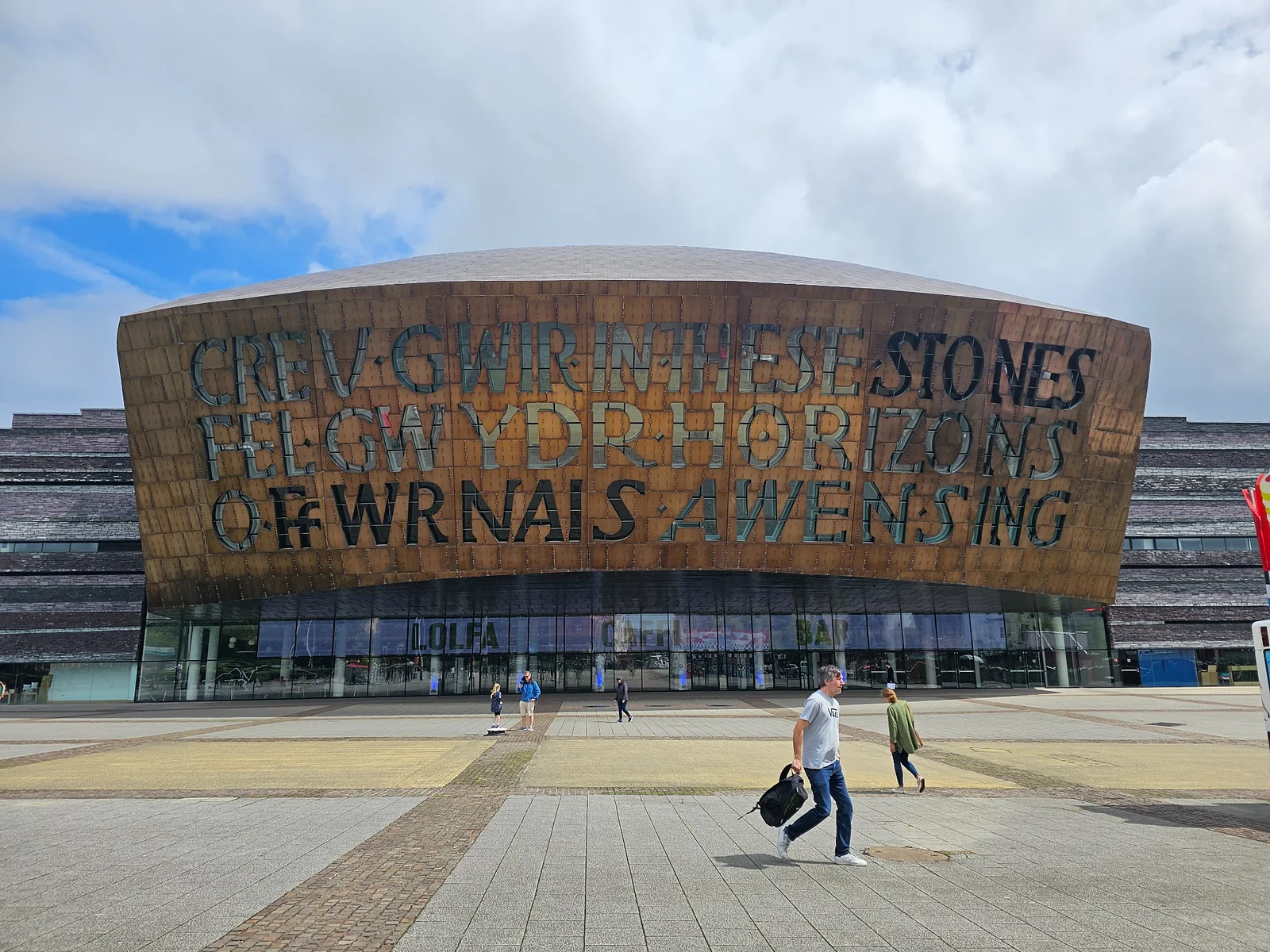
The next morning, I continued to Cardiff.
By this point I had been without my regular treatment for two days, and my patience was beginning to show more symptoms than my blood pressure.
The first pharmacy was another failure. Then I entered the second and discovered that the mythical creature actually existed:
There was a prescribing pharmacist on duty.
After Plymouth and Exeter, I almost expected celestial music.
I explained the situation and, for a few glorious moments, everything seemed to line up. Yes, he could prescribe medicines. Yes, without me first finding a doctor.
He ran through the conditions he could help with: colds, eye infections, diarrhoea and various other common problems.
Hypertension?
No.
Of course not.
After all that searching, I had found someone who could prescribe approximately everything except the medication I needed.
By then I was seriously weighing my options. Either I would eventually become ill enough to qualify for emergency treatment, or I really would have to abandon the trip and return home.
One pharmacist who actually helped
The breakthrough came later, at a pharmacy attached to a larger health centre.
The pharmacist listened to the whole story and, instead of sending me elsewhere, walked me to the medical practice himself, explained the situation to the nurse and even told her which medication I needed.
After everything that had happened, the efficiency was almost suspicious.
I did reach a doctor, though not face to face; communication took place through the nurse. Fortunately, I was carrying an officially certified list of the medication I regularly take, and that document probably prevented this story from acquiring another chapter.
The doctor still wanted to assess the situation and, as I understood it, consult a cardiologist before issuing the prescription. That struck me as slightly extraordinary for medication I had been taking for years, but by then I was not about to question a process that was moving in the right direction.
After about two hours, the prescription appeared.
The pharmacist counted out only enough tablets to last until my return to Croatia, and I had to sign to confirm that I would follow the instructions.
It was the third day of the search, and I finally had the tablets I needed.
The bill
Then came perhaps the strangest part of the British story.
There wasn’t one.
Not for the consultations, not for the blood-pressure checks, not even for the medication.
My final bill for the entire British adventure was precisely £0.
The medication itself made it even stranger. In Croatia, I normally pay a contribution towards it. In Cardiff, after all that, I paid nothing.
Only later did I realise that the final twist was specifically Welsh. Wales abolished NHS prescription charges in 2007; my prescription had been issued and dispensed there.
Apparently, pharmacies have national personalities
This was not actually the first time I had found myself abroad without medication.
On an early business trip to Sofia in 2007, my suitcase was delayed. My regular tablets were inside it. I walked into the first pharmacy, explained what I was taking and what had happened, and left with the medication I needed.
Problem solved.

Ankara in 2024 offered an even more direct pharmaceutical experience, although for a completely different problem. After being rather less careful than I should have been about where I ate, I developed spectacular diarrhoea and went looking for a pharmacy.
The pharmacist spoke a highly individual version of English, but her diagnostic process was magnificently efficient.
She looked at me and asked:
“Big shit or small shit?”
We can safely assume which answer applied.
That was apparently all the clinical information she required. Two minutes later I walked out with an antibiotic and another medicine that stopped the diarrhoea so thoroughly that it soon introduced me to the opposite problem.
No prescription had been required.
Cash had.
Several months before the British trip, I had been in New York with a colleague who developed a medical problem. Her experience had been almost the exact opposite: everything was solved in about thirty minutes, and the bill was around $700.
It was hardly a controlled comparison, but by then I had accumulated a rather peculiar international sample.
Sofia: tell the pharmacist what you need and leave with it.
Ankara: answer one brutally efficient diagnostic question, produce cash and leave with a small pharmaceutical arsenal.
New York: solve the problem immediately and prepare your credit card for impact.
Britain: pay absolutely nothing, but first complete a three-day quest involving multiple cities, pharmacies, nurses and doctors.
Finish in Wales.
And Croatia?
After all that, Croatia suddenly looked remarkably sensible.
There are situations that can turn a man into a patriot. Apparently, losing his blood-pressure pills in Britain is one of them.
That is why I now travel with two sets of medication, packed in two different bags.
Mrs Tishell taught me well.