Tampere in Winter — I Found My Finland Between Two Frozen Lakes
Published on September 24, 2026 • 15 min read
Tampere in winter gave me a flipped classroom, one very long walk, 95°C — and a hole in the ice.
I had prepared for Finland more seriously than I do for most destinations, and not only intellectually. Our hosts had stressed the importance of proper winter clothing often enough for me to treat it as an assignment: thermal underwear, thick socks, an extra sweater and whatever else seemed capable of standing between my Mediterranean body and January in Finland.
I had also bought a guidebook, because apparently freezing while uninformed would have been an unnecessarily comprehensive failure.
Once we arrived, the hosts explained why they had been so persistent. Not long before us, Erasmus visitors from another Mediterranean country had apparently turned up in Finland dressed rather more appropriately for the Mediterranean. There was no need to elaborate on the tragicomic potential of that decision.
I had done my homework properly, both sartorially and intellectually. The winter clothes proved useful immediately; the guidebook was another matter. I could prepare for Finland, but preparation did not mean that I understood it.
Tampere came after Rovaniemi and my detour through Lapland, and the change was immediately noticeable. It felt more urban, more substantial and, to me, more attractive.

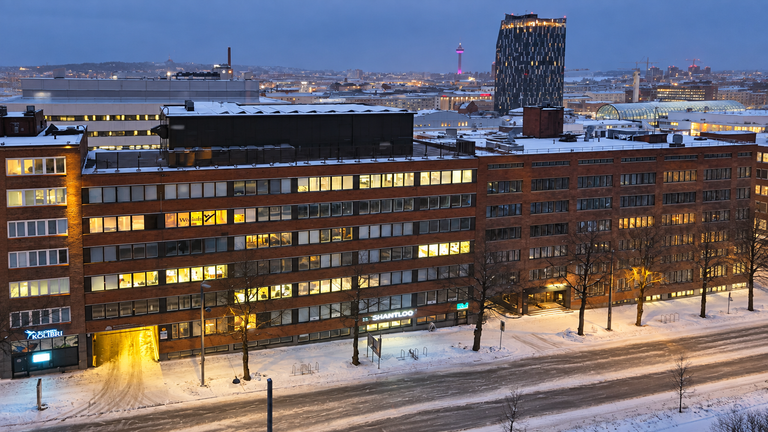
My base for the next five days was the Courtyard by Marriott Tampere City: a straightforward business hotel with consistently warm staff, rooms that were exactly what I needed on a working trip, and free popcorn in the lobby — an oddly effective little touch.
There was one thing about Tampere that I knew before arriving and initially treated as little more than geography.
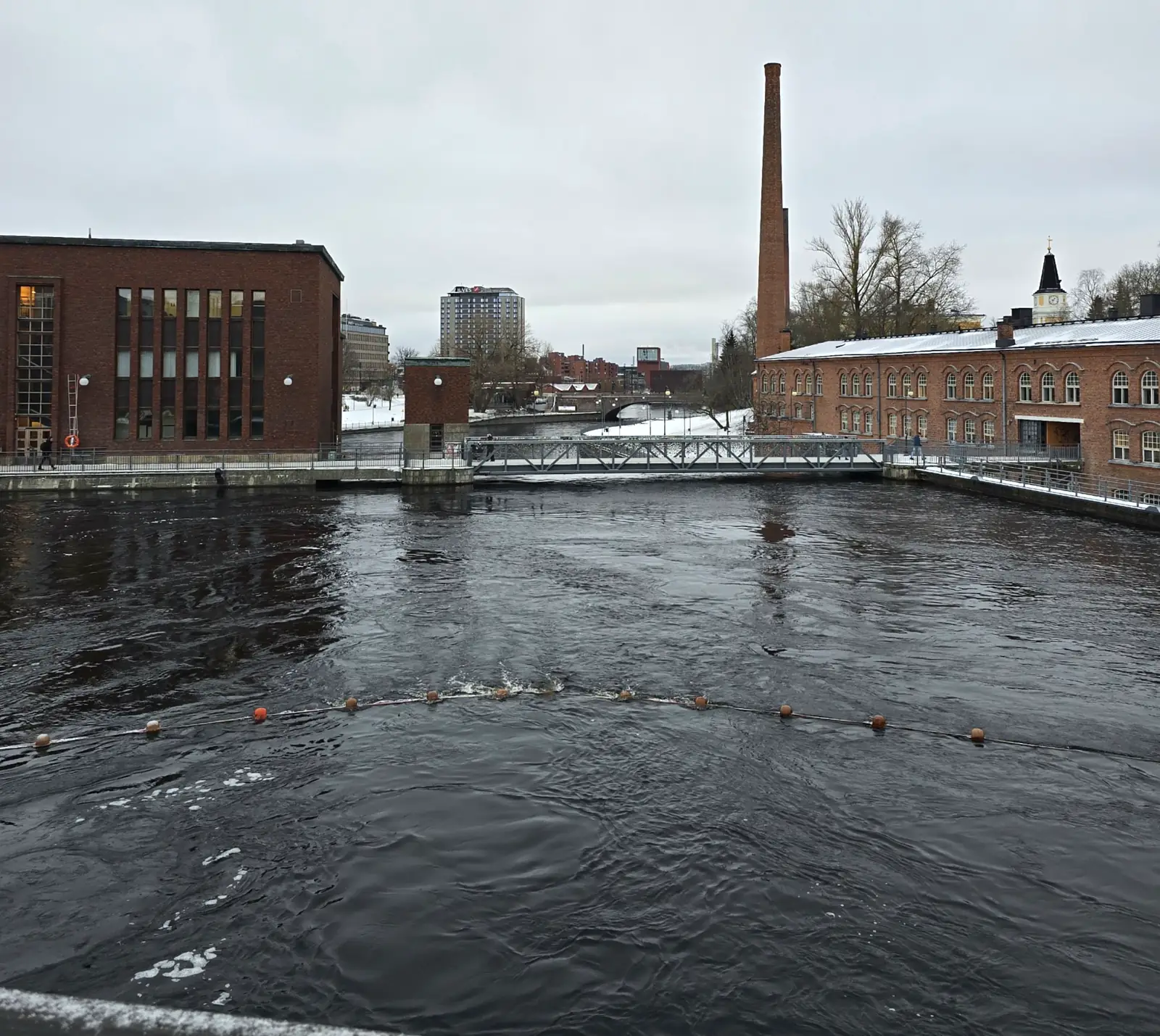
The city sits between two large lakes, Näsijärvi and Pyhäjärvi, linked by Tammerkoski, a short chain of rapids running through the city centre as water drops from the higher lake towards the lower one.
That difference in elevation provided power first for mills and later for factories, helping to explain why Tampere grew precisely where it did after its foundation in 1779.
Even in January, Tammerkoski itself remained dark and open, rushing between two lakes that were otherwise locked under ice — a neat visual reminder of why this stretch of water had enough power to shape the city around it.
On a map, however, Näsijärvi and Pyhäjärvi were still just two large blue shapes with a city squeezed between them.
The Classroom Before the City
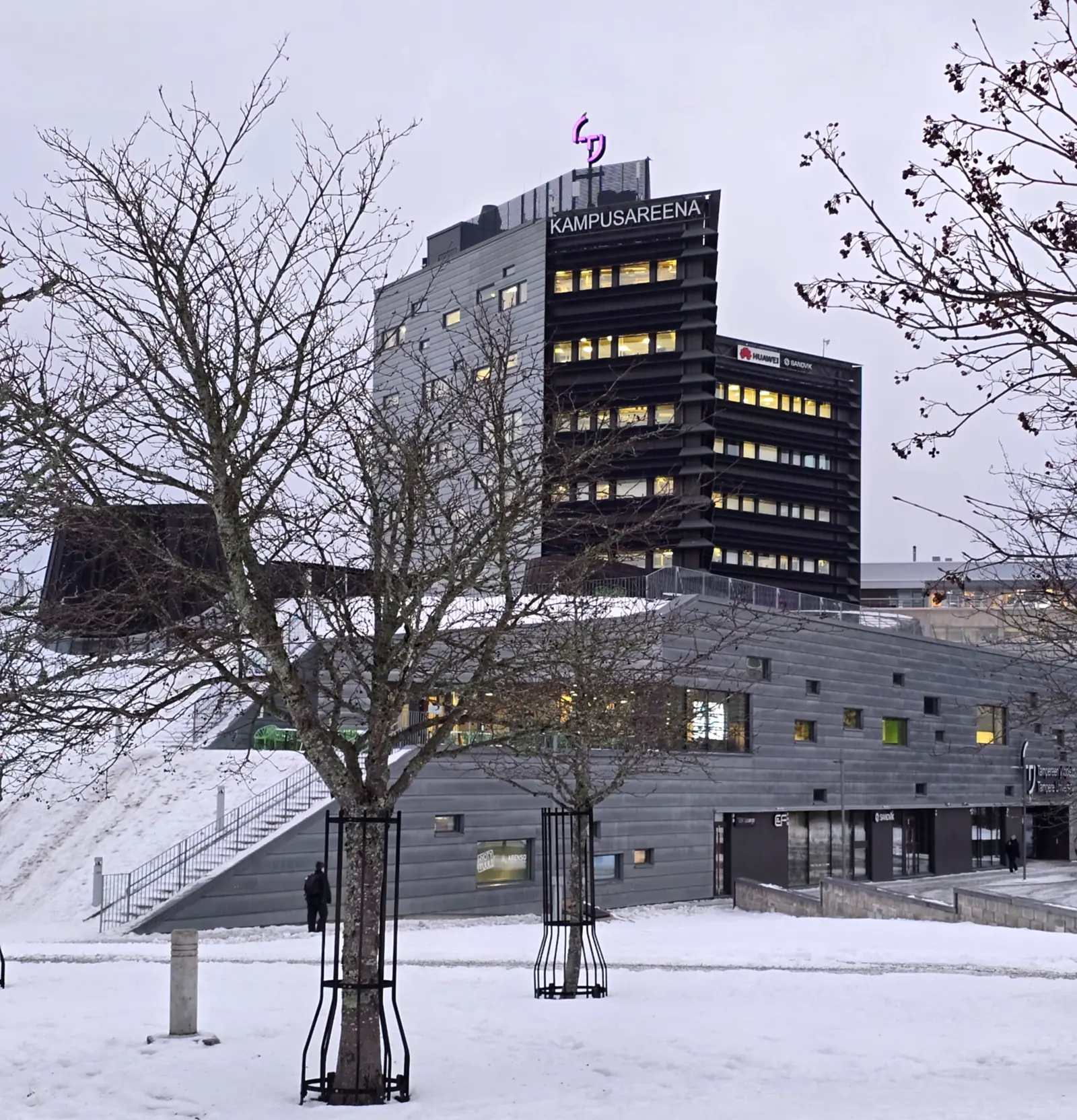
The official reason for being in Tampere was Erasmus, and one of the things I particularly wanted to see was how our Finnish hosts used the flipped classroom model.
The basic idea is hardly exotic: students encounter much of the theoretical material before class, while classroom time is used to solve problems, ask questions, test understanding and actually work with what they have prepared.
As a teaching concept, none of that was new to me.
What impressed me was how completely the students appeared to accept their part in it. They arrived prepared, started working, discussed, asked questions and seemed comfortable with the idea that university teaching was not something that simply happened to them while they sat in a room.
Anyone who has tried active teaching knows how important that distinction is.
A flipped classroom without students willing to do the preparation can very quickly become a conventional classroom with additional homework and one increasingly irritated professor.
I am not going to construct a theory of Finnish culture from a few days of observation, but cultural context clearly mattered, and I said as much to our hosts.
At the time, I regarded this as one of the professional questions I had come to Finland to explore.
The programme still left enough room to see Tampere outside university buildings.
My first walks around the centre did not produce any dramatic revelation, but they did establish that this was a city I wanted to look at more carefully.
Tampere had been shaped by water long before anyone thought of promoting its lakes as scenery, and once I knew what Tammerkoski had meant for the city, the old industrial fabric around the centre became easier to read.
One of those early evenings ended in a Viking-themed restaurant, which was a considerably less academic introduction to Finland.
Food arrived on long boards, the presentation leaned heavily into Nordic theatre, and the menu occasionally wandered into areas I was not entirely convinced needed exploring.
Reindeer heart, for example, may be authentic enough to make a point, but I am not sure it is a point I need made on my plate more than once.
I enjoyed the evening, although I would not repeat the full culinary experiment.
Still, there was something pleasing about spending the day discussing twenty-first-century education and ending it surrounded by an aggressively theatrical version of the Nordic past.
The Adriatic Breaks the Ice
During the programme, it was also our turn to explain how we worked. Presentations are part of my normal job, so standing in front of a room to talk about our university was hardly a source of drama.
The interesting moment came when the promotional video of Rijeka appeared on screen.
Suddenly there was the Adriatic: blue water, sunshine and a city descending towards the sea, all projected into a Finnish winter.
When the video ended, one of our hosts laughed and said she now understood what I had meant earlier when I argued that a fully flipped classroom also depends on cultural context.
Looking at Rijeka, she could see that our students had quite a lot to do outside the university; perhaps the first challenge was getting them to study at all.
Coming from a Finnish colleague whose students had just impressed me precisely by arriving prepared, the joke landed perfectly.
It did more to break the remaining formality than any institutional slide could have managed.
That warmer tone continued over dinner at Plevna with our hosts and on a walk through the city with one of them.
I had meatballs with mashed potatoes and enough brown sauce to make January seem manageable, but the conversation mattered more than the food.
At one point it turned to saunas.
Our hosts described the saunas in their own homes, how often they used them and what an ordinary part of domestic life they were.
Then came a detail I had not expected: because electricity had become more expensive, they were heating them less often than before — in some cases, much less often.
It no longer felt like an official programme.
By then I was even beginning to get used to the cold.
That turned out to be useful, because the next day was free.
Tampere in Winter: One Very Long Walk
I had asked ChatGPT what I should actually see, assembled a route and set off on my own.
The advantage of walking alone is that nobody has to approve the pace, the detours or the complete absence of lunch, and this particular walk became much longer than I had originally intended.
The first part stayed urban.
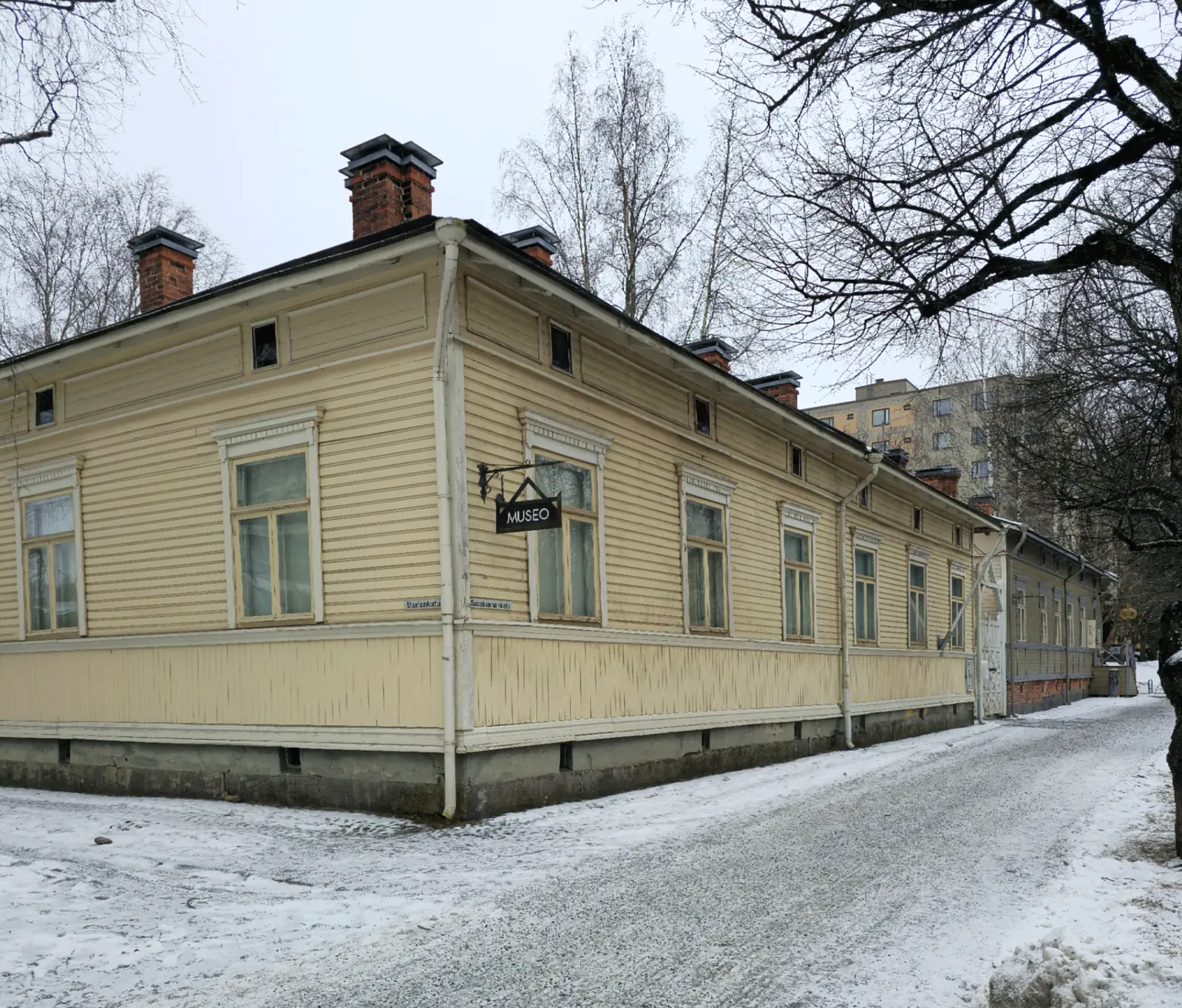
I walked through Amuri, a district built in the nineteenth century for Tampere's industrial workers. Most of its distinctive wooden housing was demolished from the late 1960s onwards and replaced by apartment blocks; only one complete block survived, now the Amuri Museum of Historic Housing.
Around it, the modern neighbourhood simply carries on.
Nearby, the Näsinneula Observation Tower rose above the trees at Särkänniemi.
It is the kind of structure that becomes an instant geographical reference point even if you never go up it, and I didn't.
I was more interested in continuing on foot than in collecting another panorama from an observation deck.
The route carried me on towards Pispala. Here the city changed character again. Streets became steeper, colourful wooden houses appeared more frequently, and another distinctive tower entered the landscape: the Pispala Shot Tower.
Unlike Näsinneula, this one belongs to the industrial history of the district. Lead shot was once produced by dropping molten metal from the top, allowing gravity and surface tension to form it into spherical pellets as it fell.
Today the red metal structure has become one of Pispala's visual landmarks.
The surrounding houses looked much more like the Finland I had imagined before arriving.
Red, blue, yellow and green wooden façades sat under snow, sometimes with little more than a narrow road between them.
I liked the area immediately, although at first the satisfaction was mostly one of recognition.
This was the Finland of photographs and guidebooks, now in front of me.


I had gone looking for Rajaportti Sauna because our hosts had talked about it at Plevna, with enough enthusiasm that I had somehow expected something substantial — perhaps a spa complex, or at least a building determined to announce its importance.
Instead I found a mustard-yellow wooden house among other wooden houses, distinguishable from some angles almost entirely by the word SAUNA on the wall.
That was much better.
Only later did I learn that, open since 1906, it is Finland’s oldest public sauna still in use.

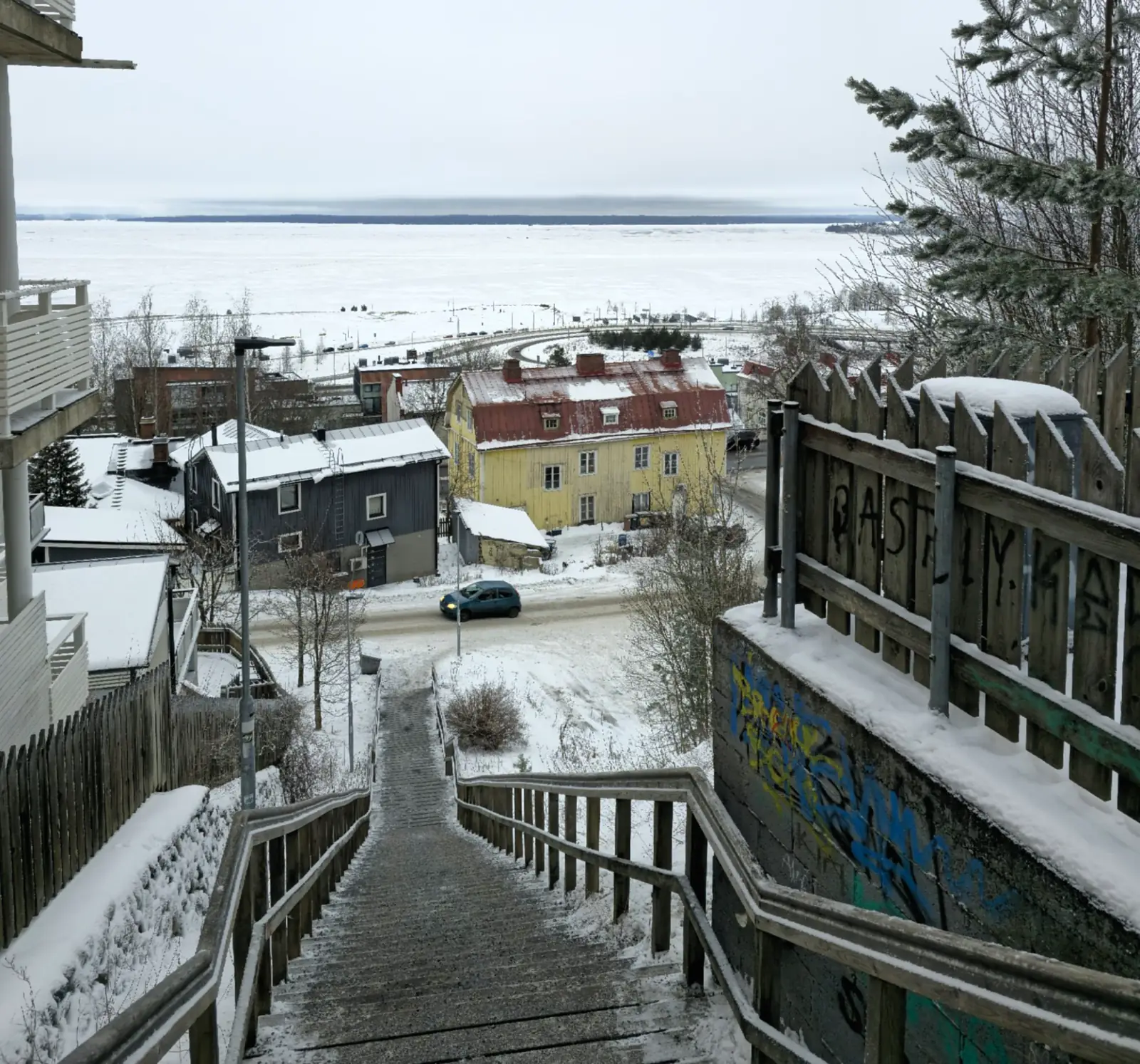
A little later the view opened towards the frozen lake.
Pispala's steep streets dropped towards an enormous white surface stretching to the opposite shore.
Rajaportti and the lake were not side by side, but I encountered them one after the other on the walk, and in my head they immediately fused into a single picture: wooden houses, deep snow, frozen water and a sauna that seemed completely at home among them.
Rovaniemi had already shown me one version of Finland.
In Pispala, those familiar images started to connect into something less like a guidebook and more like a place.
The walk continued uphill and into the forest, following the Pyynikki ridge, part of the glacial esker that separates Näsijärvi from Pyhäjärvi.
The landscape itself was explaining Tampere to me: I was literally walking the high ground between the city's two lakes.
Somewhere along the way I passed a group of kindergarten children with two teachers. The children seemed to regard snow and cold with less concern than some of us from the Mediterranean reserve for a bit of rain. There was no sense that they were heroically enduring winter; winter was simply where they happened to be spending the day.
That small scene explained something the guidebook had not:
Finnish winter was not an interruption to normal life.
It was normal life.


Further on, the city almost disappeared.
I was still in Tampere, yet the forest felt remarkably untouched, with snow-covered paths running between pines and very little to suggest that a sizeable city was close by.
I walked without stopping for coffee or lunch, partly because I was enjoying the route and partly because I had adapted enough to the temperature that being outside no longer felt like an exercise in survival.
Then the path began descending through the trees, and the second lake appeared below.
The View from the Ridge
The view opened gradually: snow in the foreground, forest around me, a few houses lower on the slope and a vast frozen surface beyond them.
The city remained visible on the opposite side, but nature dominated the scene.
It was the view I had known, in theory, Tampere could provide, because the map had always shown a city between two lakes.
Standing there, I thought of the classroom again.
Somewhere between Tampere's two frozen lakes, I suddenly realised that I had been learning Finland in exactly the same way.
I had done my preparation in Croatia — the guidebook, the geography, the climate, the sauna culture, even the thermal underwear.
But now the material was becoming real.
The lakes were no longer blue shapes on a map, the cold was no longer a number on an app, and the forest was no longer something I merely knew Finland had a lot of.
Travel often works this way, of course. I had simply never noticed it until I had spent several days watching students do it deliberately. Without planning it, I had apparently enrolled in a flipped classroom of my own.
Back to the City
The route eventually returned me towards the more urban parts of Tampere.
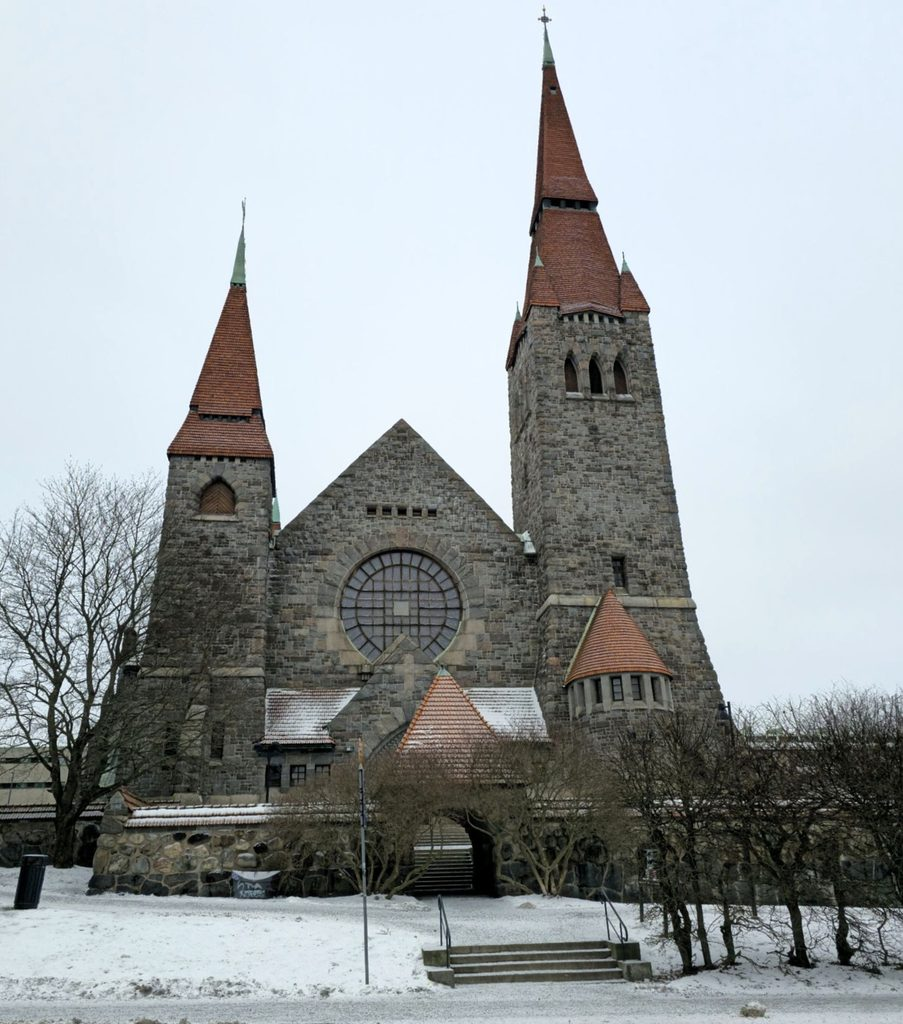
After hours of wooden houses, snow, forest and ice, Tampere Cathedral stopped me.
Its heavy stone exterior and asymmetrical towers looked almost severe against the winter sky, and very different from the kind of cathedral architecture I was used to back home in Croatia.
I went inside as well, but it was still the exterior that stayed with me most.
The building felt as though it belonged to the same landscape I had just walked through rather than having been imposed on it.
The walk had lasted several hours and I had done nothing sensible about food, but another problem had become more urgent: my hair and beard needed attention.
I spotted a barber shop, walked in without any grand plan and ended up with a talkative student who made me tea while he worked.
He was studying architecture, was especially interested in its more artistic side, and saw a surprisingly close connection between architecture and barbering.
At that point I briefly became concerned about what sort of experimental structure my hair and beard might become.
Fortunately, he was not feeling inspired.
That was the whole encounter, and it was enough.
After several hours of lakes, forests and architectural symbolism, somebody tidied me up, made me tea and sent me back into Tampere looking reassuringly conventional.
I returned to the Courtyard feeling that Tampere had become more than the place where Erasmus happened.
The day, however, was not finished.
Ninety-Five Degrees
That evening a colleague and I took an Uber to Kaupinoja Sauna. Kaupinoja appealed to me because it offered both a lakeside sauna and the possibility of winter swimming.
After Rajaportti, I should have known better than to expect a monument. Kaupinoja looked plain, functional and decidedly unglamorous.
Then I noticed the number of people. Inside, it managed to be both large and cramped.
The sauna itself was substantial, but the crowd removed any illusion of space. Nobody appeared interested in Nordic spa minimalism, and the temperature hovered around 95°C.
This was a mixed sauna, so swimwear was worn inside; nudity was largely confined to the showers, which was more or less what I expected.
The hats were not.
There were ordinary sauna hats, knitted versions, increasingly elaborate variations and even Viking-style specimens. I had never before seen people enter extreme heat with so much specialised headwear.
Outside, sausages were being grilled and eaten almost at the sauna door. It was a normal winter evening, and everyone except us seemed to know it.
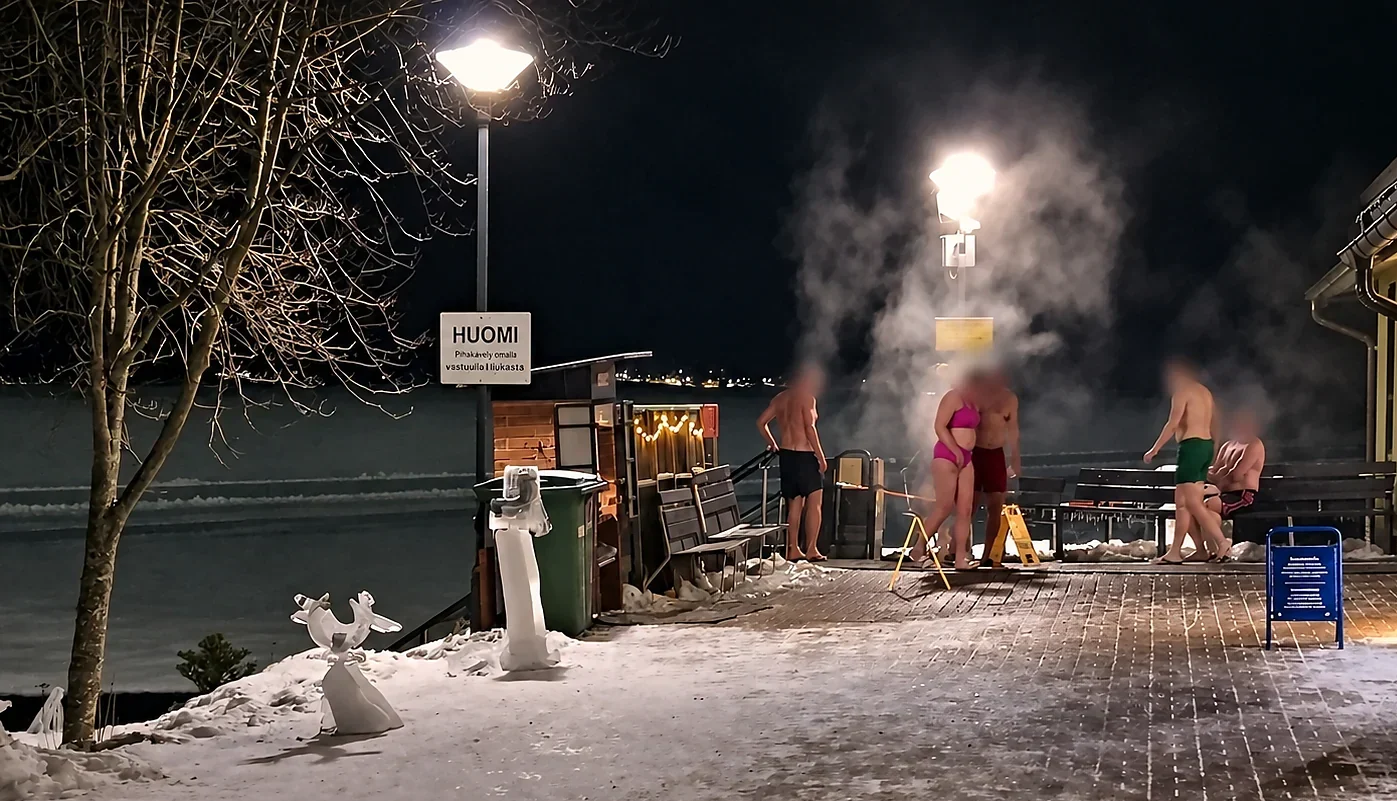
Three rounds followed:
heat, cold, heat, cold, and a final return to the heat.
Sitting outside in swimwear with snow around my bare feet should have felt ridiculous, but somewhere between the second and third round it began to feel almost reasonable.
Afterwards I felt less euphoric than completely reset: calm, clean and thoroughly drained.
The only unfinished part of the practical exercise waited a few metres away, where an opening had been cut in the ice for access to the lake.
My colleague went in and emerged looking deservedly pleased with himself.
Sixteen years between us turned out to be enough to divide the roles quite neatly:
he went into the lake; I photographed him.
Hypertension gave me a medically respectable excuse, which was convenient because otherwise I might have had to admit that I had simply chickened out at the sight of a hole in a frozen Finnish lake.
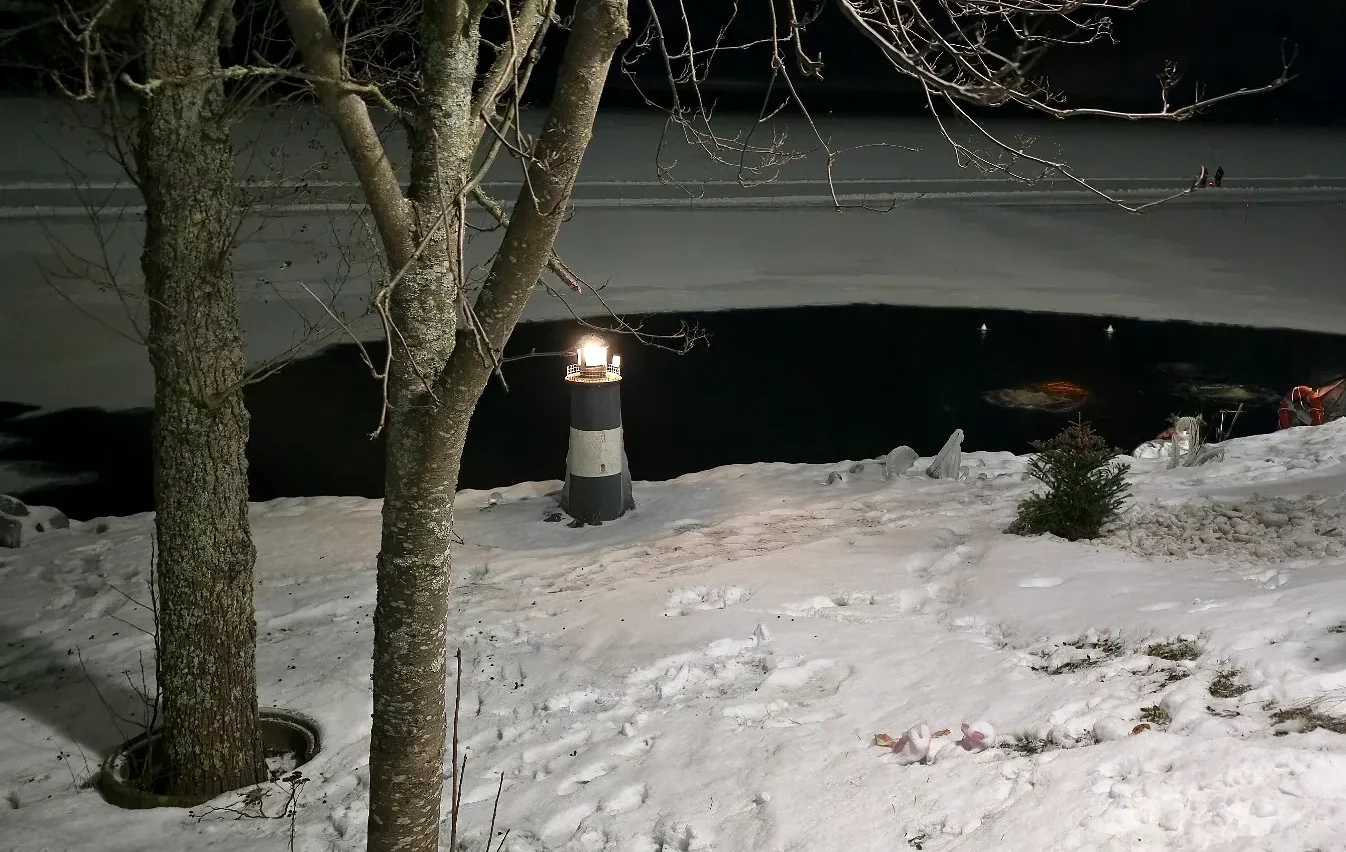
A shower and dry clothes were followed by an Uber back to the Courtyard.
Dinner was a large steak with roasted vegetables, fries and sauces, exactly the sort of meal that made sense after several hours of walking and three rounds in a Finnish sauna.
The food had been one of the hotel's pleasant surprises throughout the stay, and that evening the steak was especially welcome.
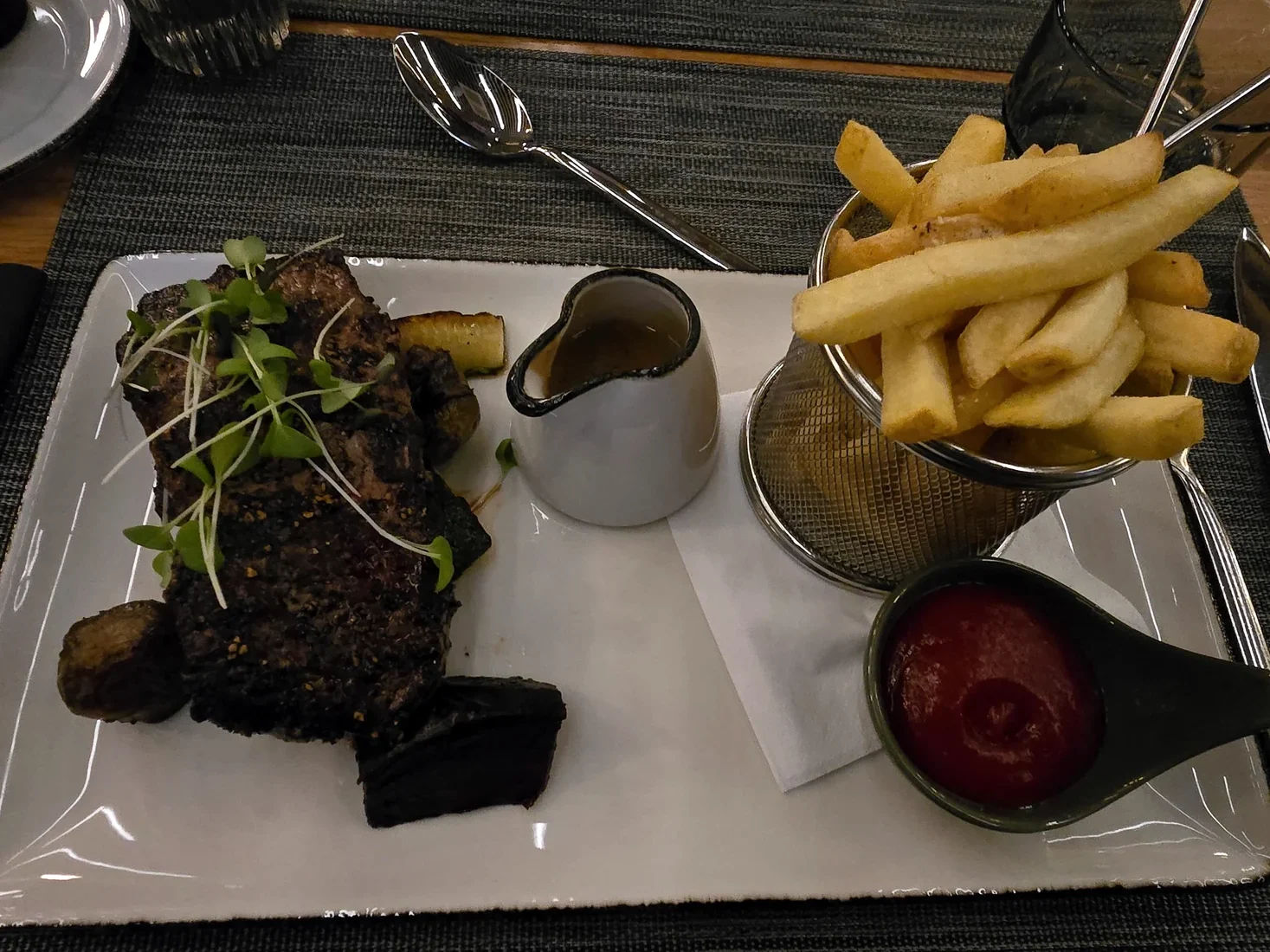
For a while I sat there feeling exceptionally peaceful and completely emptied out.
Then reality resumed: I still had serious work left to do on the slides for the following morning.
Any permanent state of Nordic enlightenment produced by three rounds at 95°C lasted approximately until PowerPoint opened.
Leaving with Unfinished Homework
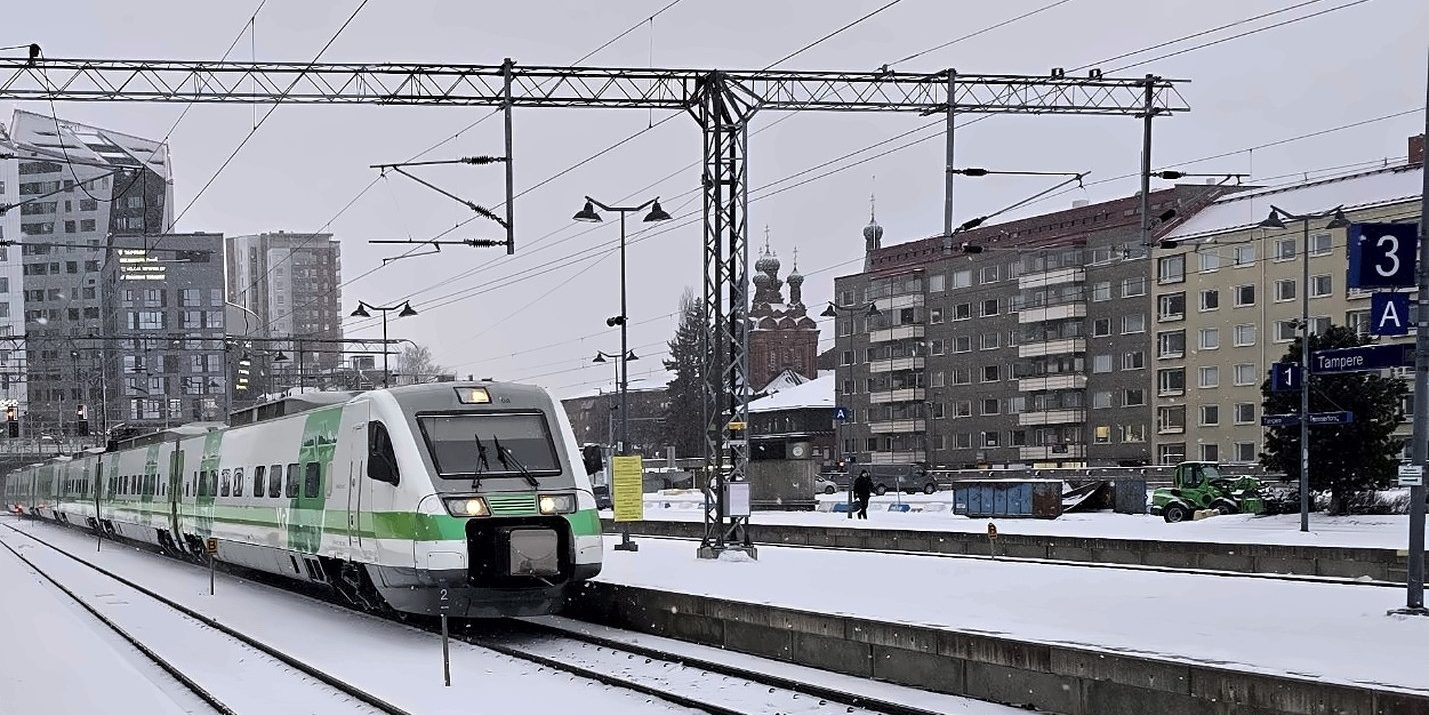
When the programme ended, I headed to Tampere railway station for the train to Helsinki.

I did not leave convinced that Tampere had suddenly become my favourite city, nor did it need to. What had changed was that I could now imagine returning without Erasmus, without a programme and without having to stand at the front of a classroom the next morning. I would come back simply to spend more time there.
Tampere had shown me something I had not quite understood from home: a city where streets can turn into forest with surprising speed, where lakes are part of the urban fabric, and where sauna belongs to ordinary life rather than cultural display.
I had arrived in Tampere to see how Finnish students learned through a flipped classroom.
Somewhere between two frozen lakes, Finland finally started making sense.
And at 95°C, the lesson was complete enough for a very good grade.
Excellent would have required the ice bath.